
Milagros Pereda
Argentina
Materia Forma Distorsion
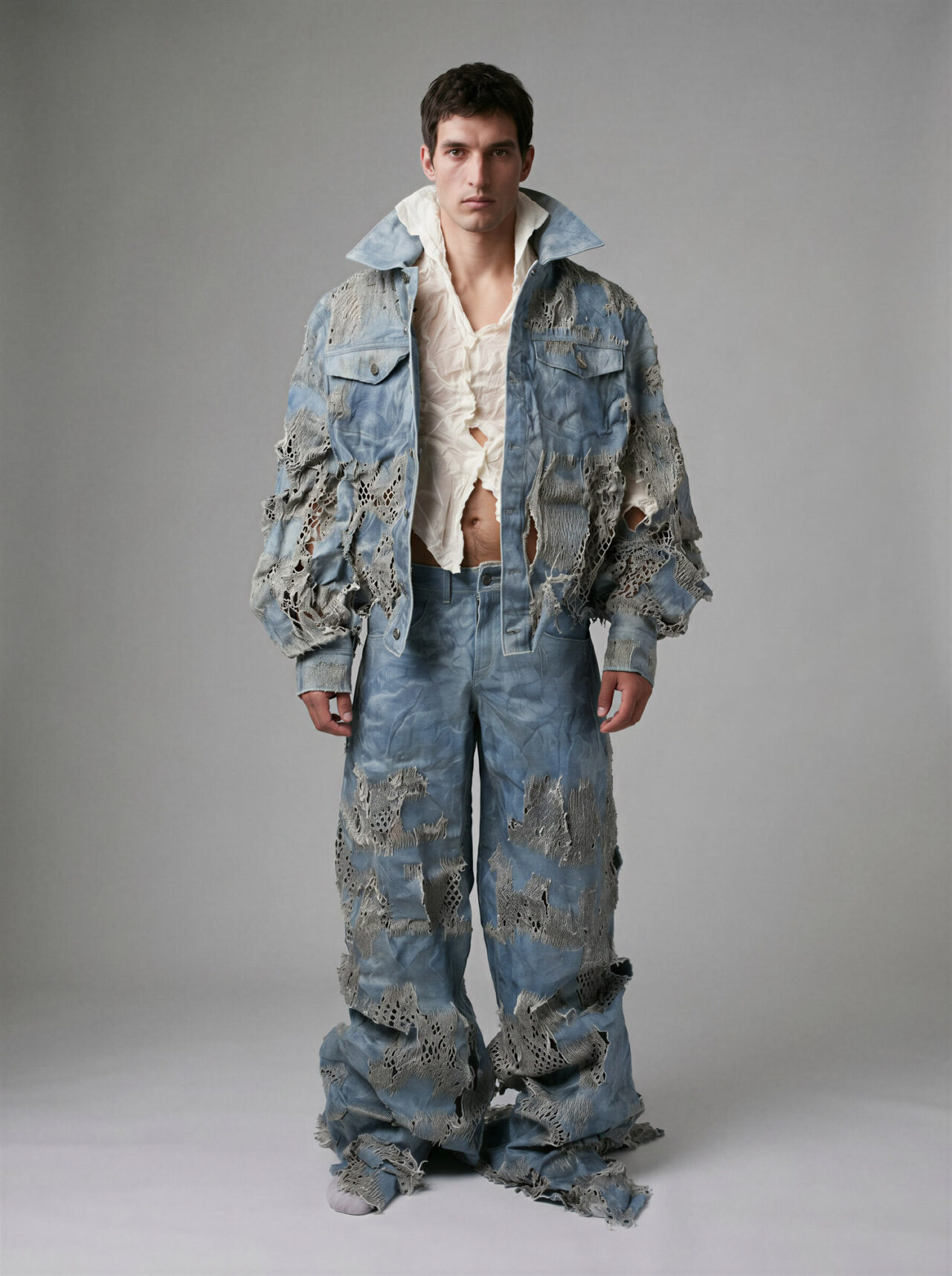
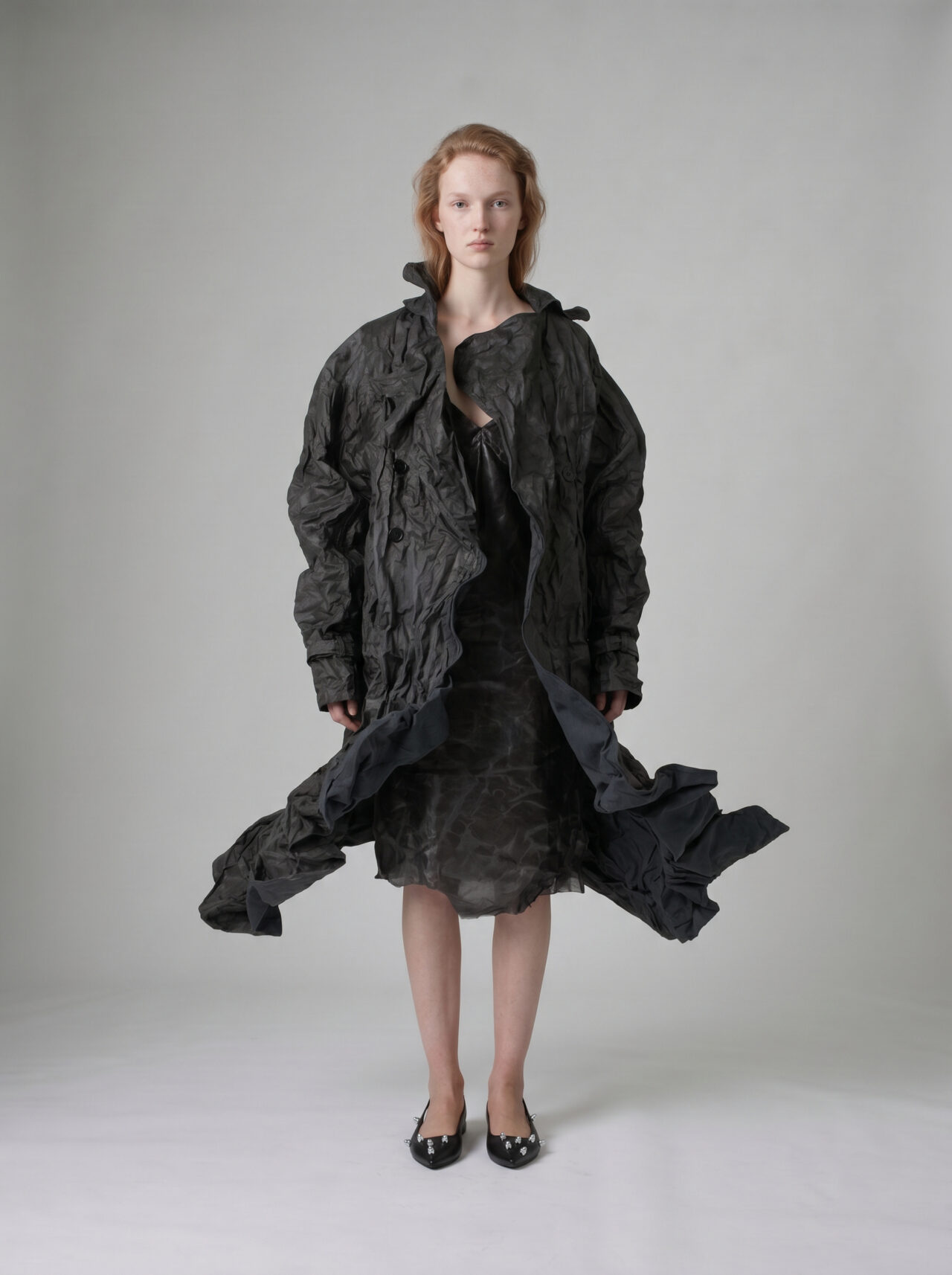
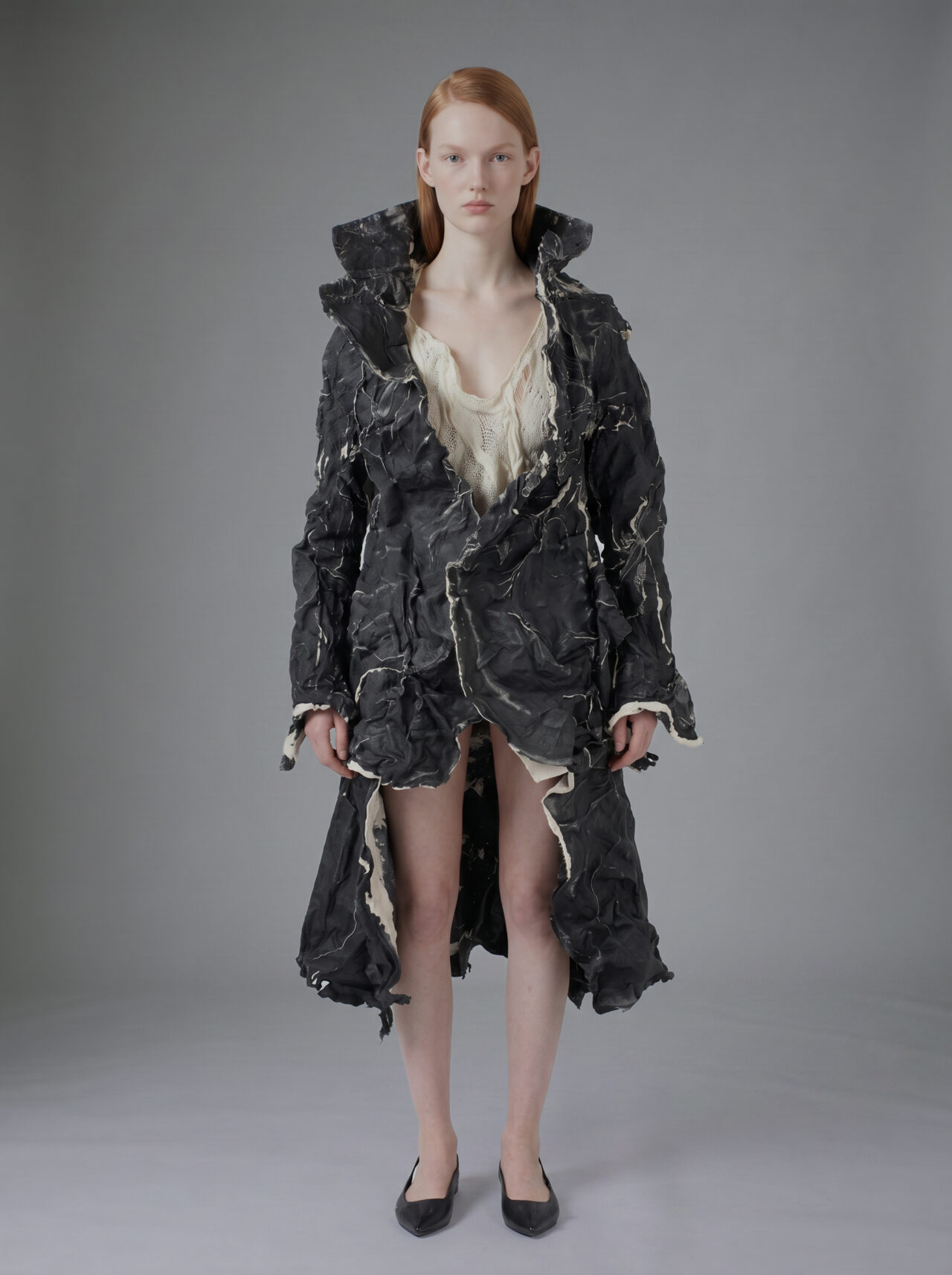
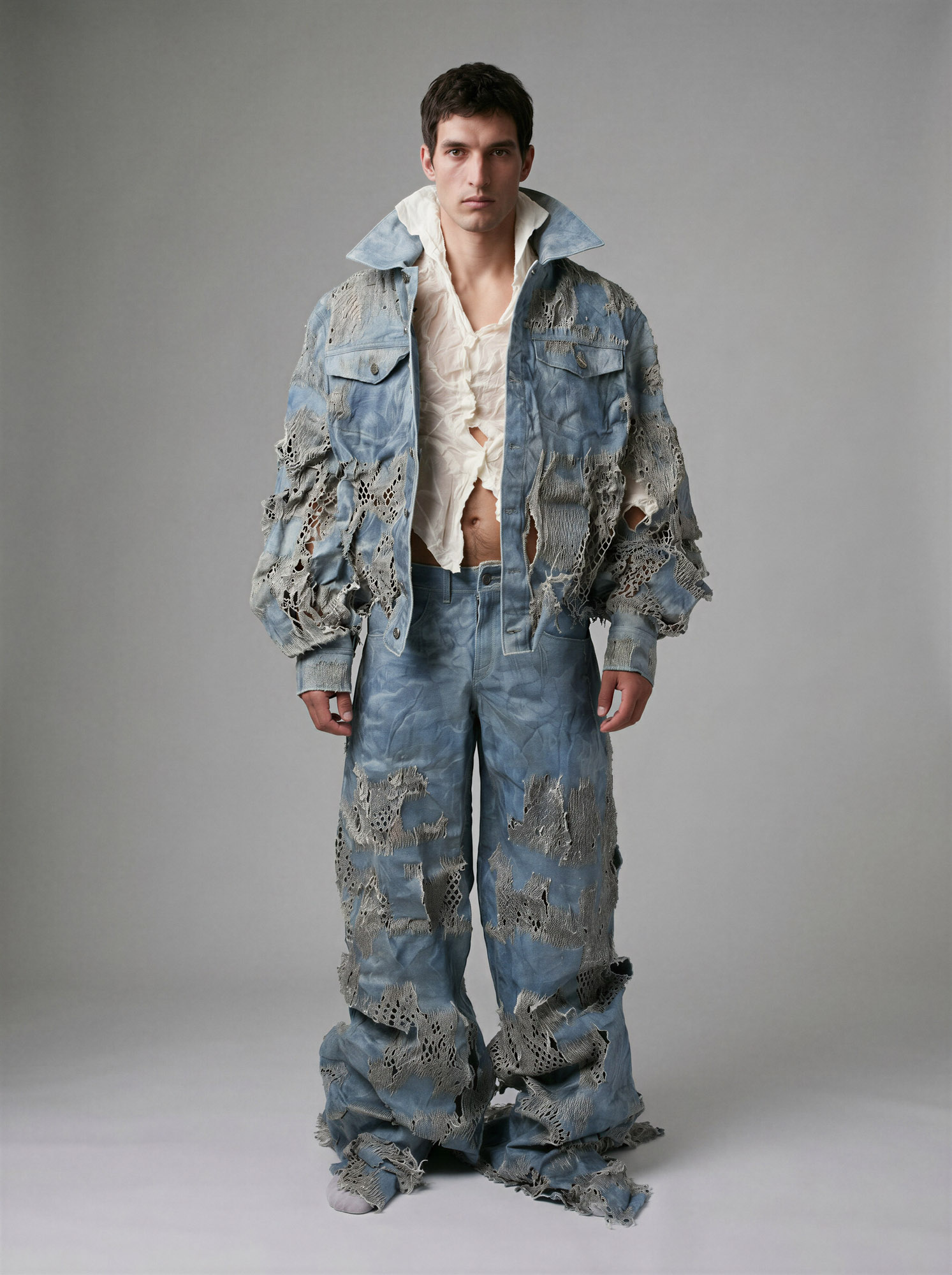
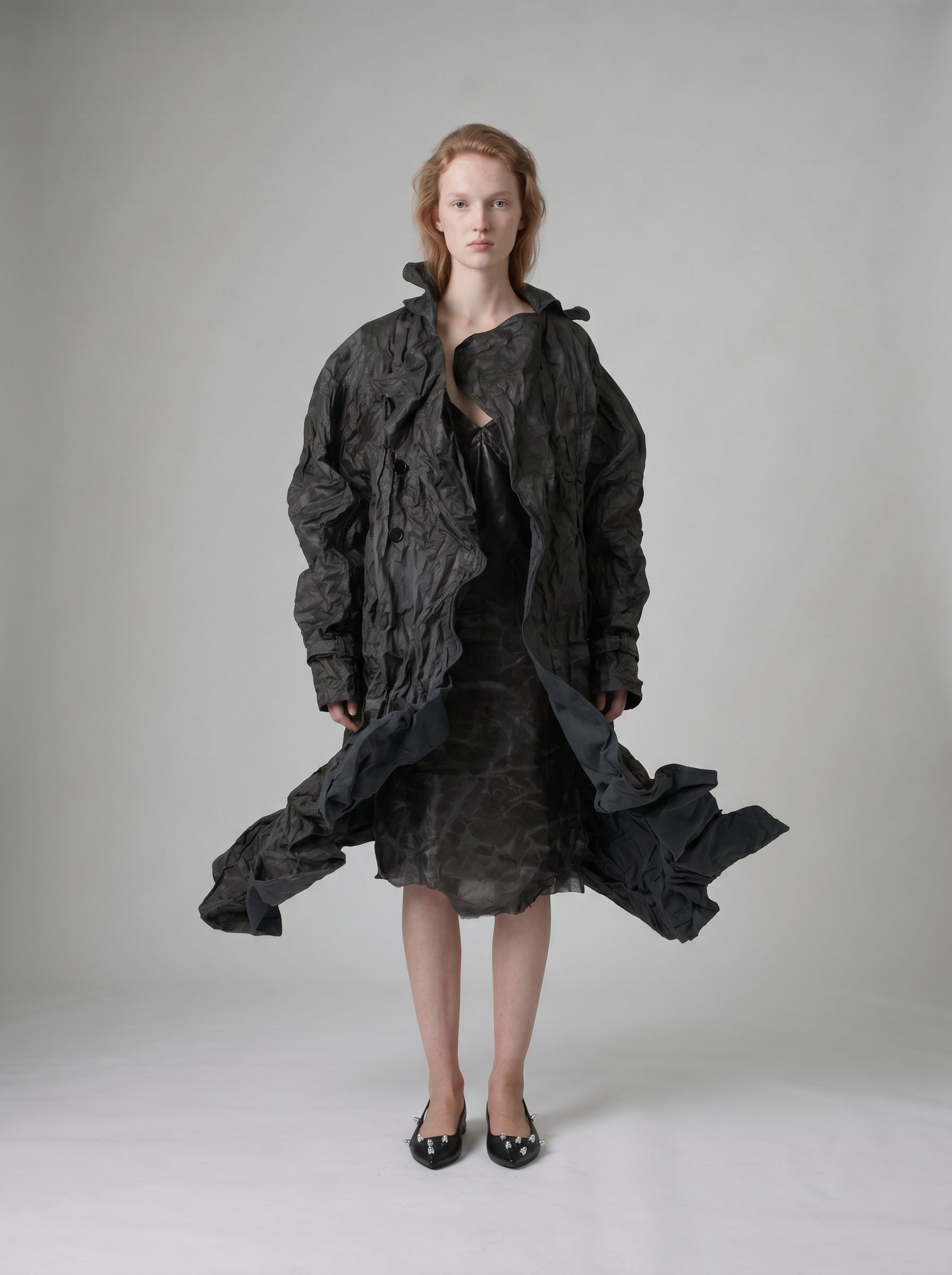
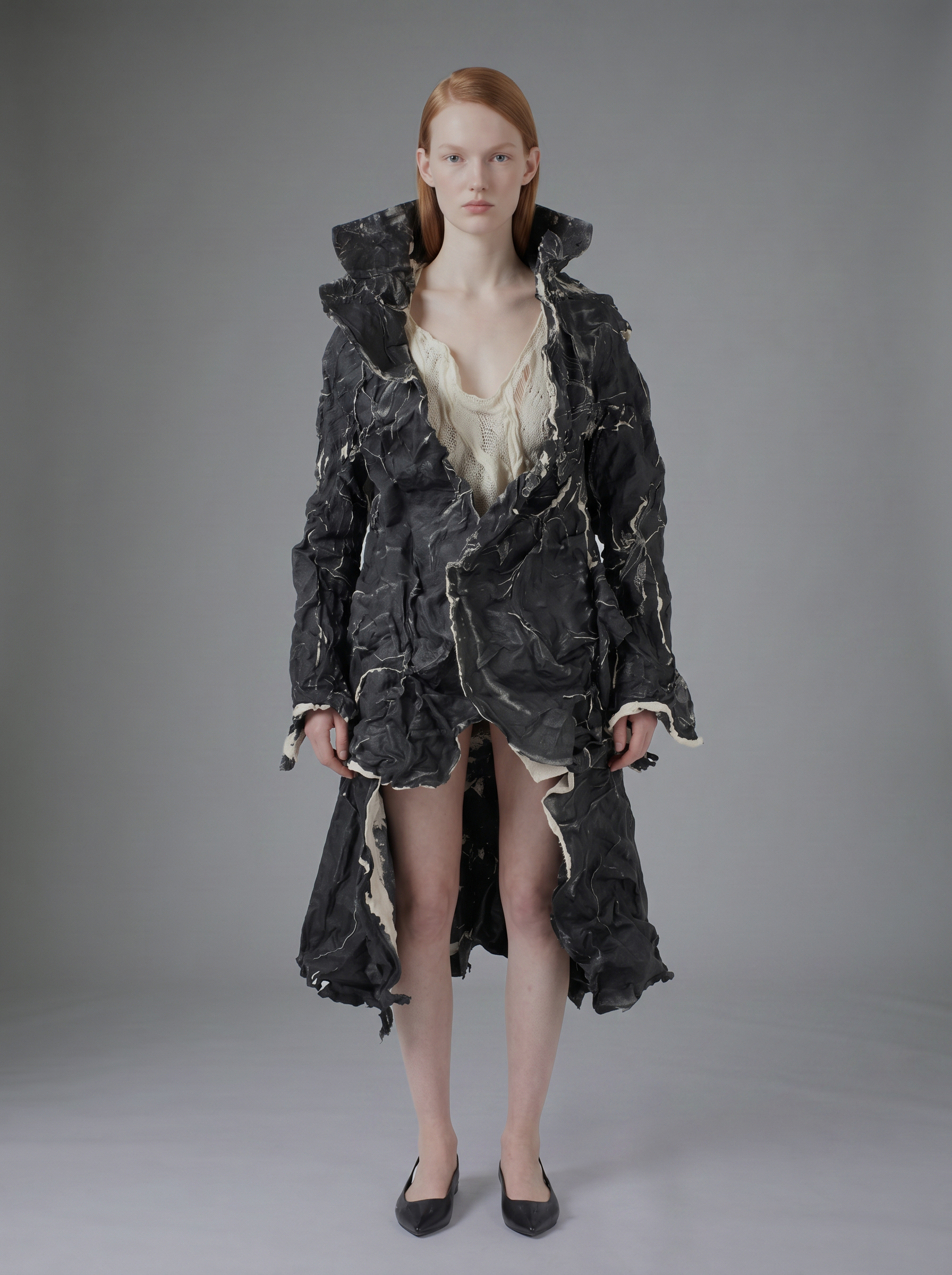
The work begins with iconic everyday garments that feel frozen in time—pieces worn almost unchanged for decades. Through distortion, volume, and material experimentation, their familiarity is interrupted and new forms are revealed. By transforming overlooked archetypes into irreproducible, sometimes uncomfortable wearable sculptures, it challenges what is considered normal, timeless, and disposable.
The work is drawn to garments endlessly reproduced by industry: the white shirt, blue jeans, and tank top—items so familiar they become invisible. Their permanence feels “frozen in time.” This led to an experiment of freezing them (in an actual freezer) to explore new shapes and forms, using this process as a starting point to expose their cultural weight and disrupt our automatic relationship with clothing.
The work uses overlooked materials such as recycled yarns, deadstock textiles, and undyed natural fibers, transformed through combination with natural biomaterials like agar-agar bioplastics and water-based gels. These biodegradable binders act as coatings, providing structure, texture, and presence, turning humble fabrics into sculptural, self-supporting surfaces.
The work begins with iconic everyday garments that feel frozen in time—pieces worn almost unchanged for decades. Through distortion, volume, and material experimentation, their familiarity is interrupted and new forms are revealed. By transforming overlooked archetypes into irreproducible, sometimes uncomfortable wearable sculptures, it challenges what is considered normal, timeless, and disposable.
The work is drawn to garments endlessly reproduced by industry: the white shirt, blue jeans, and tank top—items so familiar they become invisible. Their permanence feels “frozen in time.” This led to an experiment of freezing them (in an actual freezer) to explore new shapes and forms, using this process as a starting point to expose their cultural weight and disrupt our automatic relationship with clothing.
The work uses overlooked materials such as recycled yarns, deadstock textiles, and undyed natural fibers, transformed through combination with natural biomaterials like agar-agar bioplastics and water-based gels. These biodegradable binders act as coatings, providing structure, texture, and presence, turning humble fabrics into sculptural, self-supporting surfaces.