
Lea Tamina Lafrenz
Germany
NAHVERKEHR
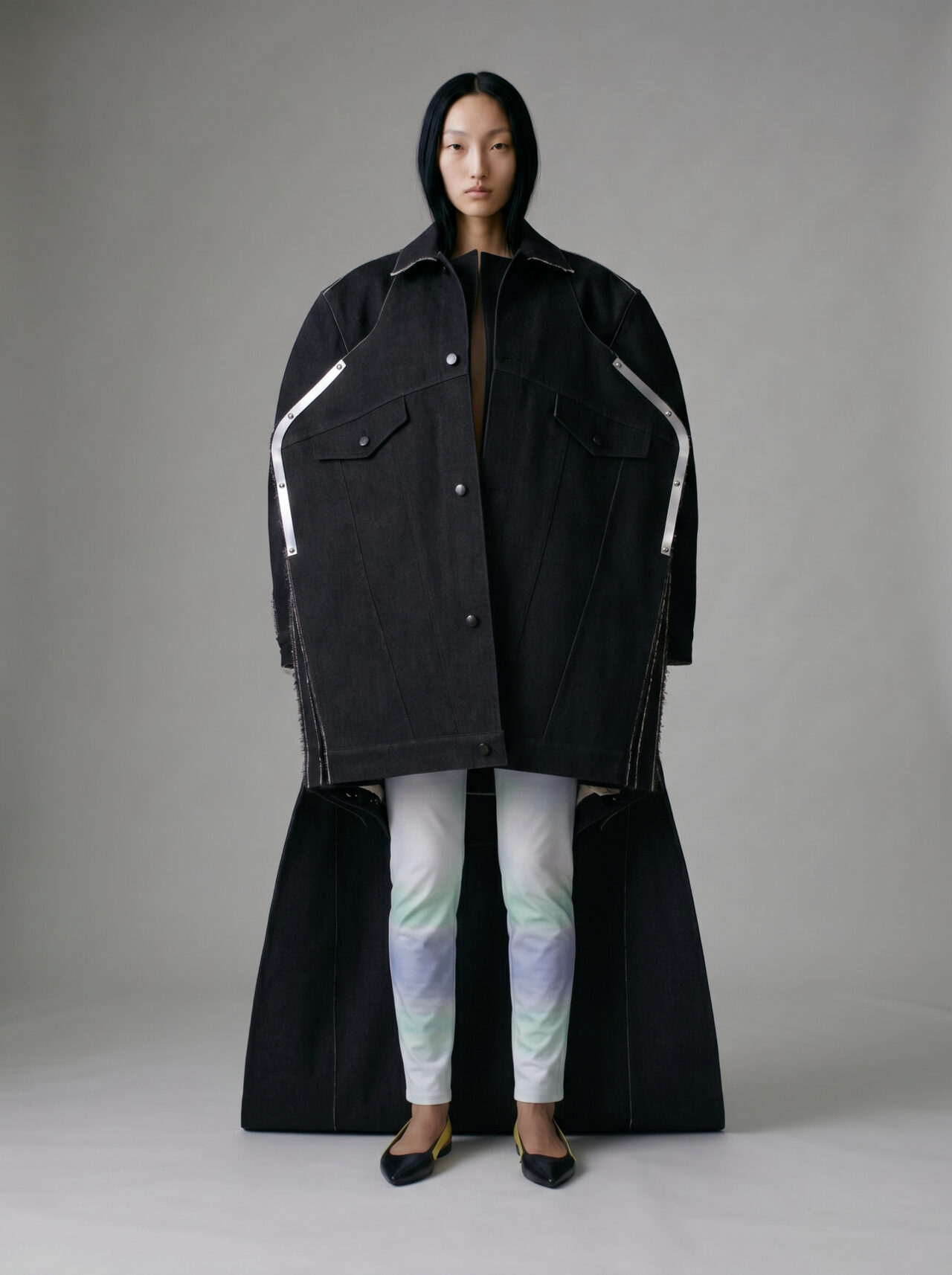
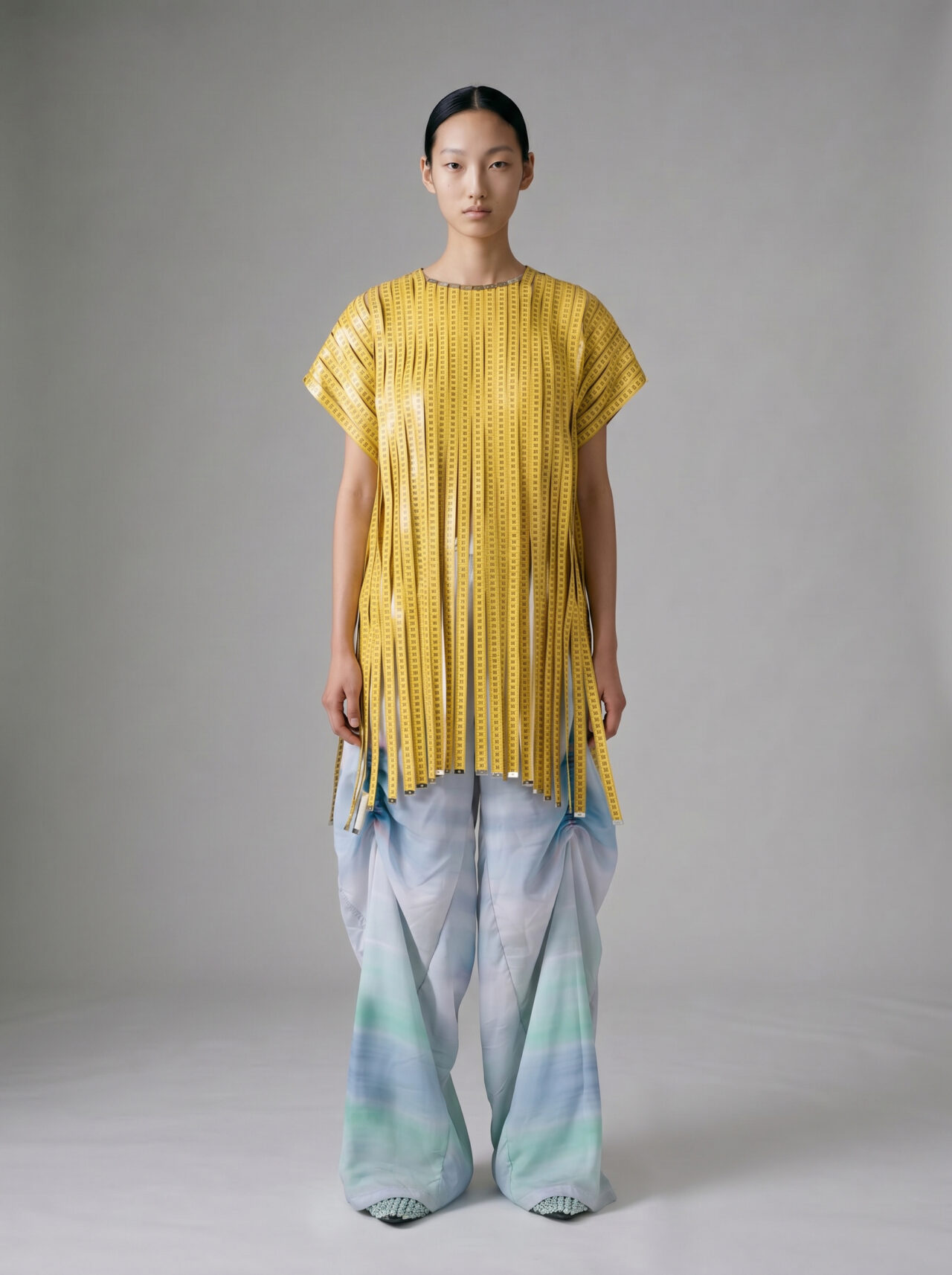
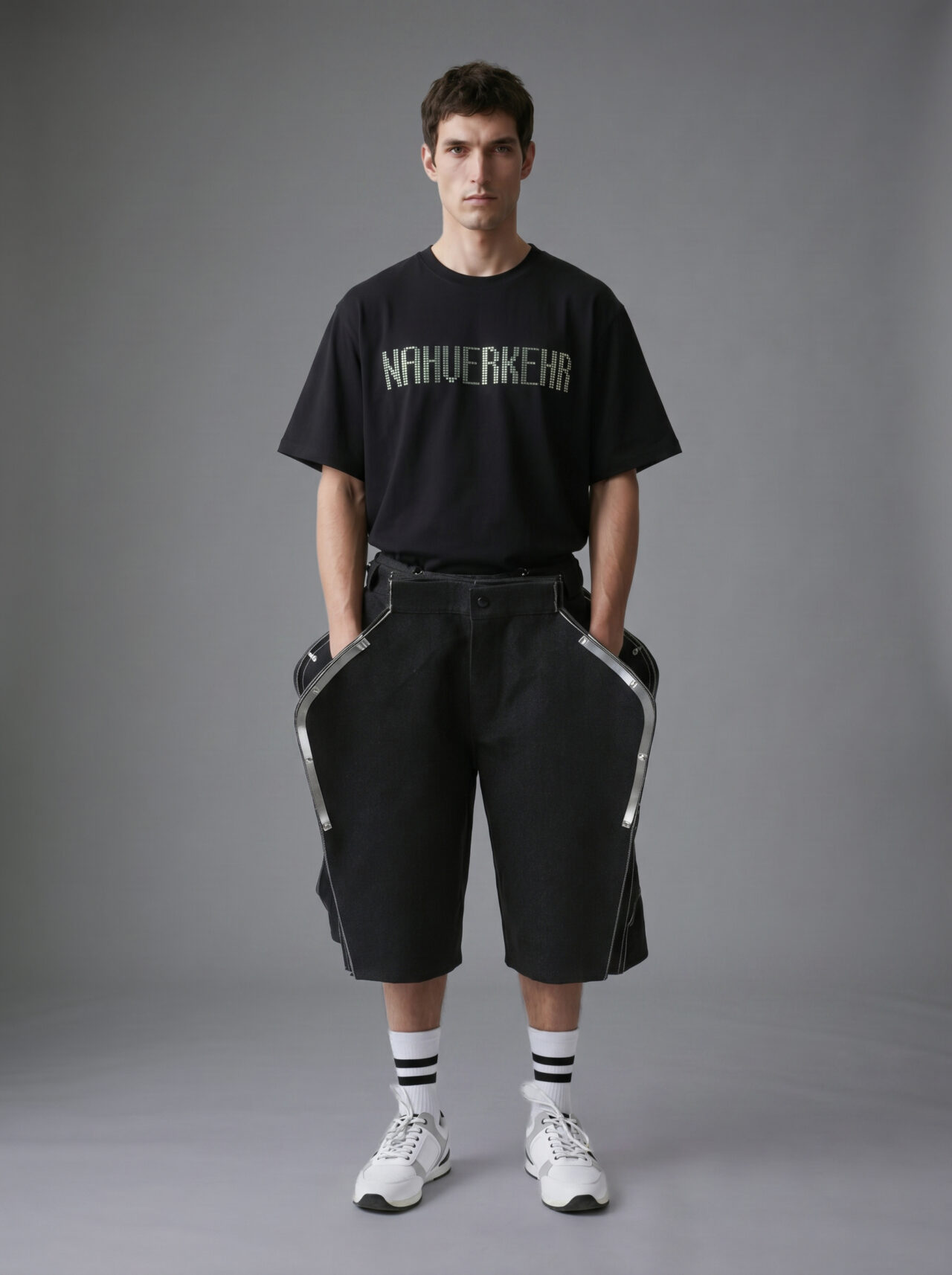
NAHVERKEHR examines both physical and interpersonal in-between spaces in public transportation. It explores how spatial perception influences interactions and how these dynamics can be translated into wearable experiences, aiming to make the invisible visible.
The participatory designs invite wearers to consciously perceive closeness and distance through their own bodies.
Inspired by the heightened perception of space experienced during daily commutes, the collection reflects on public transportation as an environment where strangers occupy overlapping zones of intimacy and personal boundaries become blurred.
Drawing on the concept of proxemics, the study of interpersonal perception of space, the project explores how these impressions and the idea of the “in-between” can be made tangible through garments.
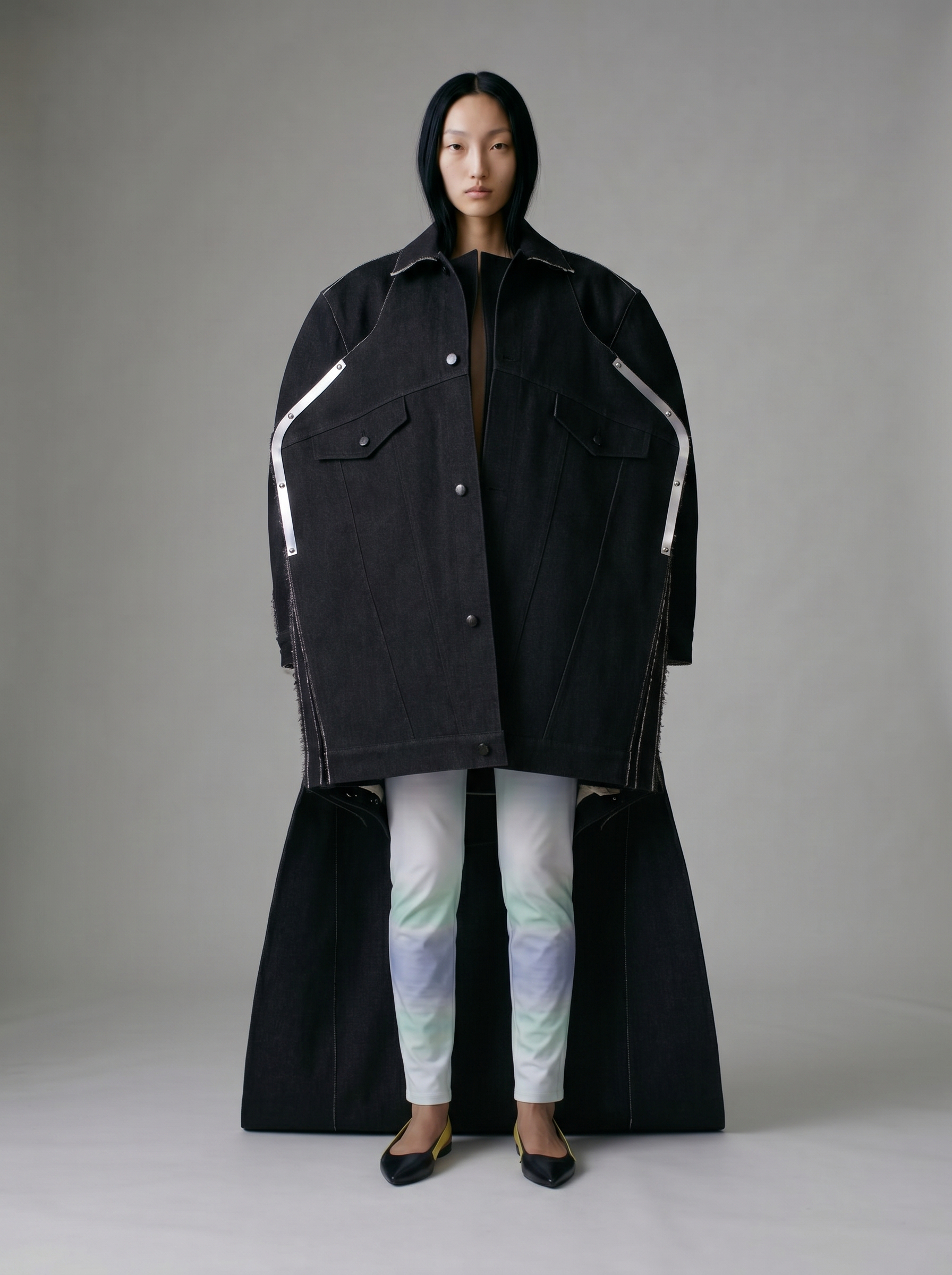
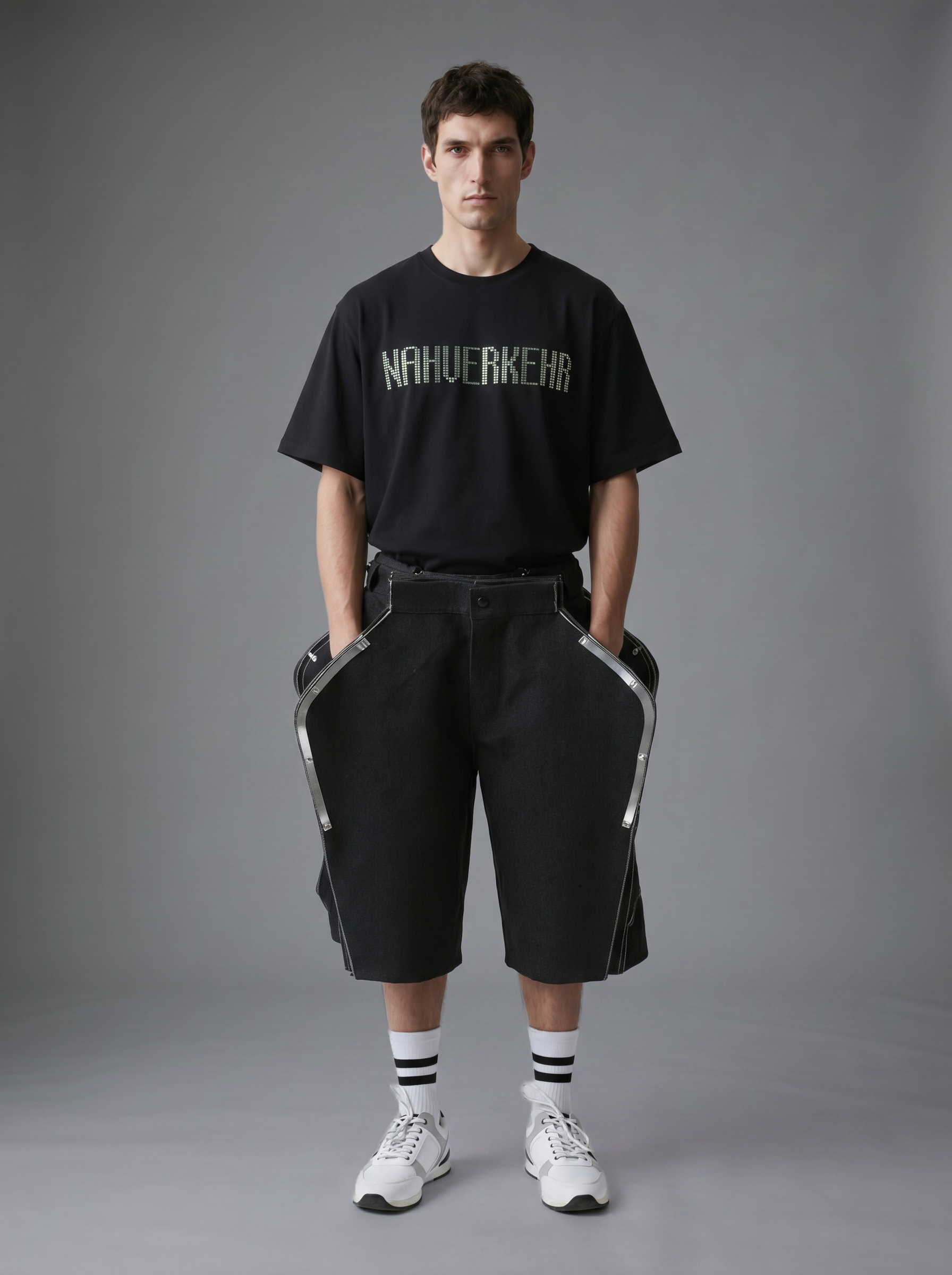
Garments are made from stiffened heavyweight denim with hand-cut metal edges attached by screws, mimicking mechanical elements and creating distinctive silhouettes.
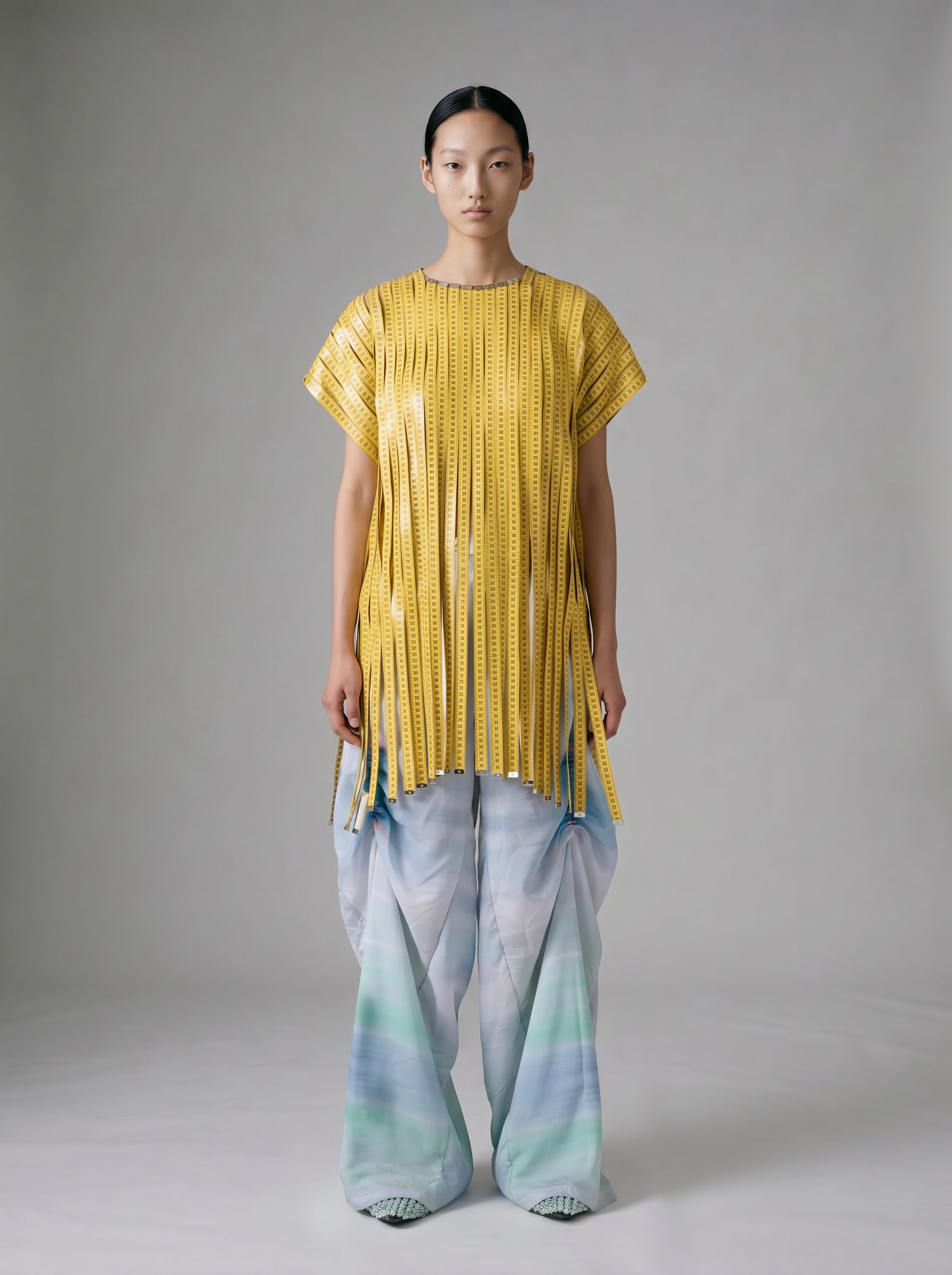
Measuring tapes sewn onto elastic bands create loose, swinging textile surfaces. Concrete weights continuously gather drawstrings and compress fabrics. A blurred view from a train window is printed onto the fabrics.
NAHVERKEHR examines both physical and interpersonal in-between spaces in public transportation. It explores how spatial perception influences interactions and how these dynamics can be translated into wearable experiences, aiming to make the invisible visible.
The participatory designs invite wearers to consciously perceive closeness and distance through their own bodies.
Inspired by the heightened perception of space experienced during daily commutes, the collection reflects on public transportation as an environment where strangers occupy overlapping zones of intimacy and personal boundaries become blurred.
Drawing on the concept of proxemics, the study of interpersonal perception of space, the project explores how these impressions and the idea of the “in-between” can be made tangible through garments.
Garments are made from stiffened heavyweight denim with hand-cut metal edges attached by screws, mimicking mechanical elements and creating distinctive silhouettes.
Measuring tapes sewn onto elastic bands create loose, swinging textile surfaces. Concrete weights continuously gather drawstrings and compress fabrics. A blurred view from a train window is printed onto the fabrics.